.webp)
Stage: Assess
01 Complete real AI tasks


AI Assessment te ofrece un punto de partida verificado sobre cómo tu equipo utiliza realmente la IA — por equipo, función y puesto — y qué desarrollar primero.
AI Transformation lleva a tus equipos desde un punto de partida medible hacia nuevas formas de trabajar, y ayuda a consolidarlas a medida que la IA sigue evolucionando.

De los proyectos piloto a una adopción real de la IA
Lleva la IA a toda tu organización.
.avif)
Has invertido en IA. ¿Está funcionando?
Diez minutos para obtener una respuesta clara.
Investigación, guías y herramientas para equipos que adoptan la IA
De los proyectos piloto a una adopción real de la IA
Lleva la IA a toda tu organización.
Has invertido en IA. ¿Está funcionando?
Diez minutos para obtener una respuesta clara.

Evolve Level assesses how each person works with AI through realistic scenarios adapted to their role and domain. It evaluates both the outcome and the process, then identifies skill gaps and development priorities.
The capability blind spot

56%
University of Melbourne and KPMG
of employees who use AI at work have made mistakes because of it.
Course completion shows that someone finished the program. It doesn’t verify whether they can apply AI to a role-specific task.

90%
Pluralsight
of executives don’t fully understand their teams’ AI skill levels and proficiency.
Course completion shows that someone finished the program. It doesn’t verify whether they can apply AI to a role-specific task.
Confidence is not capability
of employees who use AI at work have made mistakes in their work because of AI.
Self-reported confidence cannot show how someone works with AI in a realistic task or provide a reliable baseline across the workforce.
.webp)
.webp)
.webp)
Stage: Assess
01 Complete real AI tasks
Each person completes scenarios built around their role and domain. The isolated workspace can reflect relevant cases and use selected AI tools and models without accessing production systems or proprietary data.
.webp)
Stage: Measure
02 Evaluate the process and the result
Evolve Level evaluates the final output and the actions and decisions behind it, including how the person frames the task, provides context, and uses the model’s capabilities.
.webp)
Stage: Prioritize
03 Build the skills baseline
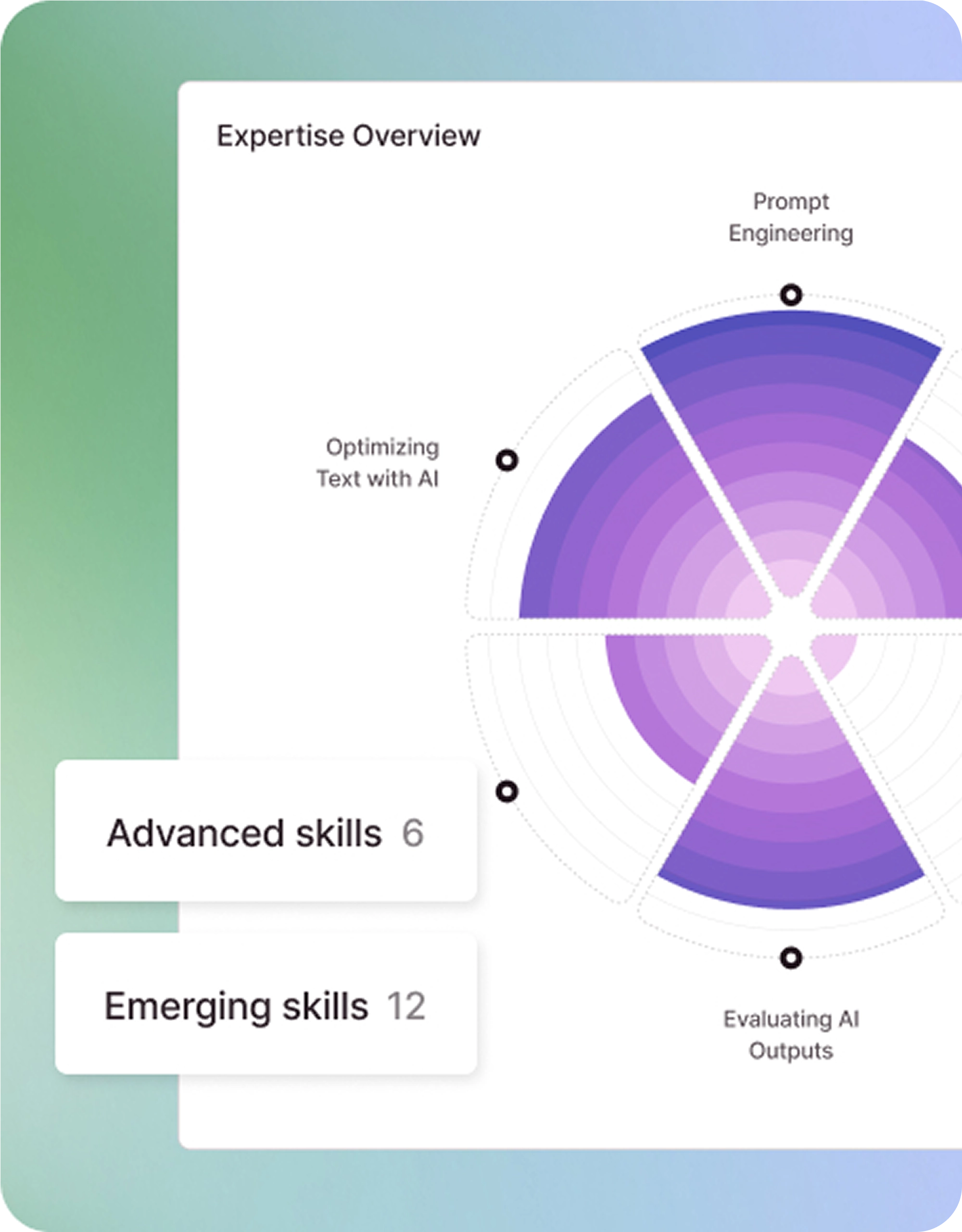
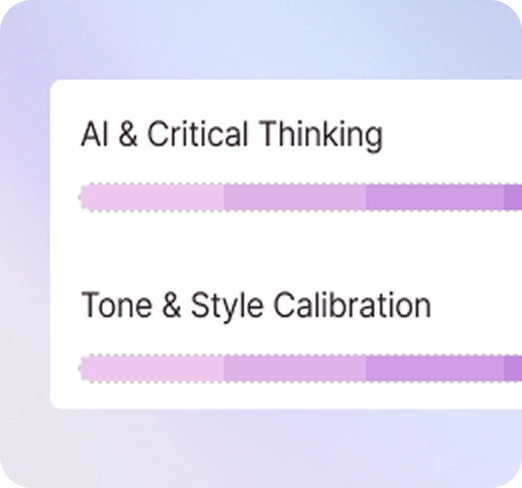
Results are organized by person, role, domain, and skill, then aggregated across teams and functions. This reveals who needs development, which gaps should be prioritized, and who already demonstrates strong capability.
.webp)
Stage: Develop
04 Generate and update the development path
Evolve Level turns each person’s results into a targeted development path based on the skills they need to build. After training, Level reassesses the same skills to show what improved and updates the path based on the remaining gaps.
What your organization gets


.webp)

.webp)
Evolve Level identifies who needs development, which skills to prioritize, and which employees are ready to support AI initiatives. Leaders can use that evidence to avoid broad training, allocate budget more precisely, and verify progress after development.

Expert-built scoring criteria

Synthetic, isolated environments
Performance, not self-reporting

Configurable development thresholds
Psychometricians and subject-matter experts define the criteria for every AI skill, informed by relevant research and field data. Evolve Level applies those criteria consistently to everyone assessed on that skill.
Assessments recreate real working situations without accessing production systems, company codebases, or proprietary data.
People demonstrate their capability by completing real tasks. Results are based on what they do and the decisions they make, not how they rate their own knowledge.
L&D and HR teams can adjust the thresholds used to prioritize development according to their organization's standards and goals.
The Evolve suite

.webp)
Measure how people apply AI, identify gaps by role and skill, and generate personalized development paths.

.webp)
Map how teams get work done and turn real workflows into owned plans for AI-enabled change.

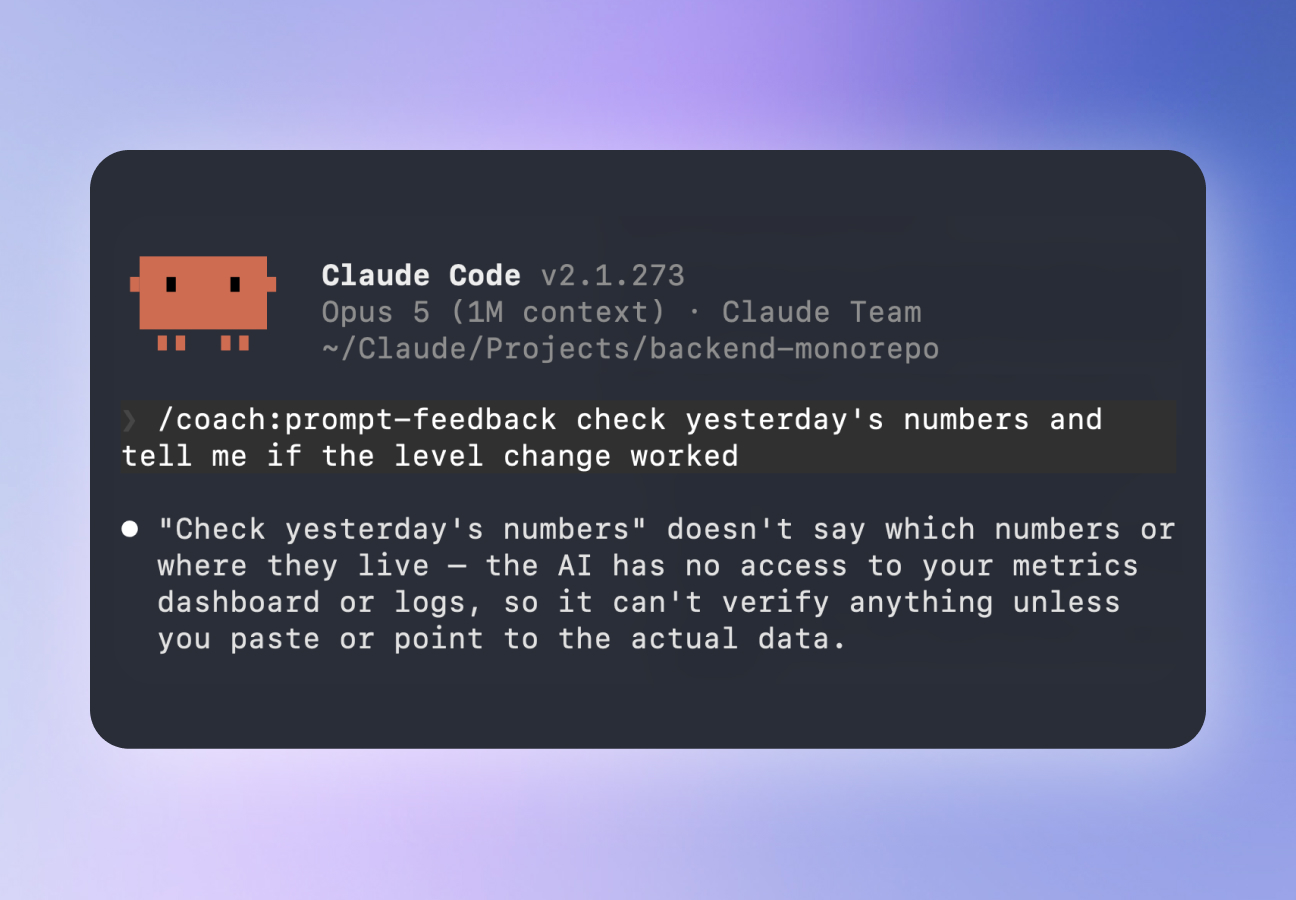
Give professionals useful AI coaching while they work and show leaders how their teams work with AI over time.
An AI skills assessment measures how well employees can apply AI in their work, not just what they know about it. It can evaluate prompting, critical judgment, output validation, workflow integration, and knowing when not to rely on AI.
An AI skills assessment focuses on people’s ability to work with AI. An AI maturity assessment examines the broader organization, including strategy, data, infrastructure, governance, and operating models. Evolve Level provides a verified baseline for the people dimension of AI maturity but does not replace a complete maturity assessment.
Companies can define the AI skills required for each role and evaluate employees through realistic work scenarios. Results can then be scored by domain and skill and aggregated across teams, functions, and roles. Evolve Level applies this approach to create a verified workforce capability baseline.
Self-assessments measure perceived confidence, while quizzes primarily test knowledge and recall. Evolve Level uses realistic scenarios to show how someone applies AI, evaluates its output, and makes decisions while completing a task.
Yes. Evolve Level adapts assessment scenarios and scoring criteria to the skills required by each role. Assessments can take place in an LLM chat, simulated IDE, or task-based workspace, depending on the capability being measured.
Evolve Level shows each person’s strengths and skill gaps by role, domain, and individual skill. These results roll up into comparable views across teams and functions and generate personalized recommendations for what each person should develop next.
Assessments take place in synthetic, isolated workspaces that recreate relevant tasks without accessing production systems, company codebases, or proprietary data.

Evolve Level shows who needs training, which skills to prioritize, who is already proficient, and whether capability improves after development.
